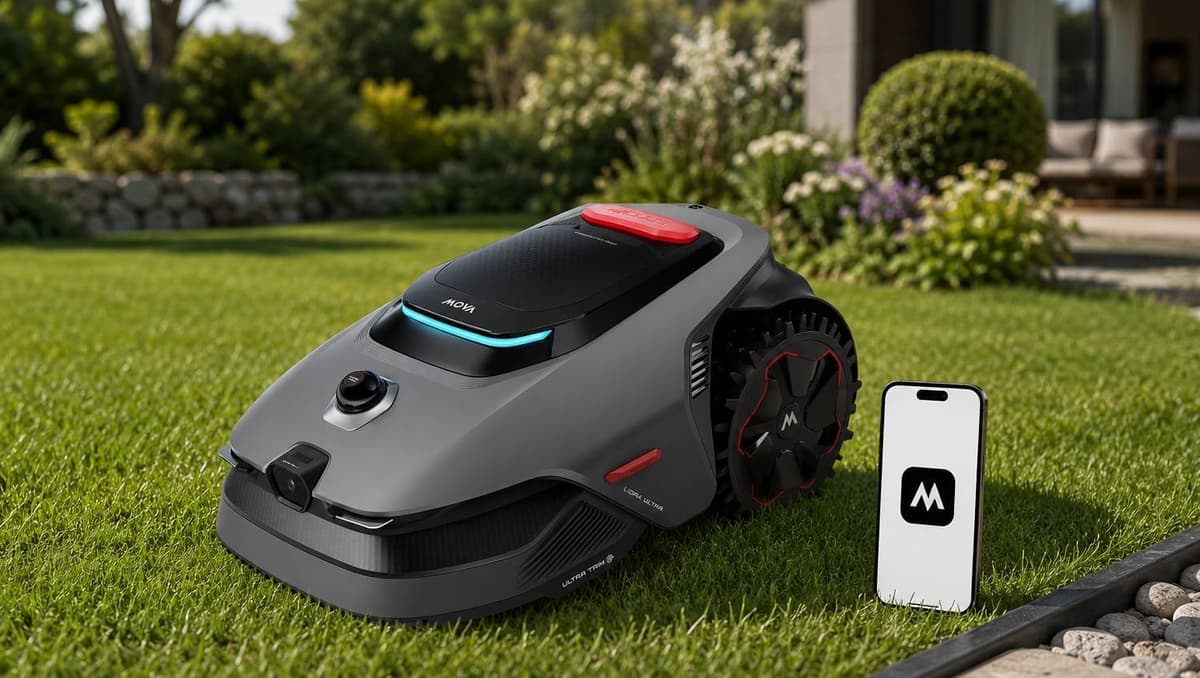
If you have never used a robotic lawn mower before, you may wonder: how does a robot lawn mower work? Unlike a traditional mower that requires you to push or drive it around the yard, a robot lawn mower can cut grass automatically, return to its charging station, and follow a mowing schedule with minimal supervision.
For Canadian homeowners, robotic lawn mowers can be particularly useful during the busy growing season. But understanding how the technology works can help you choose the right model and set it up correctly.
How Does a Robot Lawn Mower Work?
A robot lawn mower combines several technologies to mow grass without constant human control. Depending on the model, these can include electric motors, cutting blades, sensors, GPS or RTK positioning, cameras, LiDAR, boundary systems, batteries, and smartphone connectivity.
The basic process is relatively simple. You define the area where the mower is allowed to operate, configure a mowing schedule, and let the mower handle the routine work. It moves around the lawn, cuts grass gradually, monitors its surroundings, and returns to the charging station when its battery is low.
After charging, many models can automatically resume mowing until the scheduled task is completed.
How Does a Robot Lawn Mower Know Where to Mow?
Navigation is one of the most important parts of a robotic mower.
Traditional models may use a physical boundary wire installed around the perimeter of the lawn. The mower detects the signal from the wire and stays within the designated mowing area.
Newer models can use wire free navigation technologies. GPS and RTK positioning can provide highly accurate location information, allowing homeowners to create virtual boundaries through an app. Some advanced models also use cameras, LiDAR, or other sensors to understand the environment around the mower.
This technology can be particularly useful for Canadian yards with multiple sections, landscaping features, trees, pathways, and other obstacles.
Setting Boundaries
Before the mower starts working, it needs to know where it can and cannot go.
With a traditional boundary wire system, the wire is installed around the lawn and around areas that should be avoided, such as flower beds, ponds, vegetable gardens, or certain pathways.
With wire free systems, homeowners can often create virtual boundaries directly in a mobile app. After mapping the property, users can define mowing zones and no go areas without physically installing a wire around the yard.
For homeowners with complicated landscaping, virtual mapping can make installation and future changes much easier.
How Does a Robot Lawn Mower Cut Grass?
Robot lawn mowers typically use small rotating blades underneath the mower deck. Instead of cutting large amounts of grass at once, they are designed to mow frequently and remove only a small amount of grass each time.
This approach is sometimes called mulching. The small grass clippings are left on the lawn, where they can decompose naturally and return nutrients to the soil.
Because the mower works regularly, the lawn can maintain a more consistent appearance without requiring homeowners to dedicate several hours to mowing every week.
What Happens When the Battery Is Low?
One of the most convenient features of a robot lawn mower is automatic recharging.
When the battery reaches a predetermined level, the mower stops cutting and navigates back to its charging station. It connects to the charging contacts and begins charging automatically.
Once the battery has sufficient power, the mower can return to the lawn and continue its scheduled mowing task. This means homeowners generally do not need to monitor battery levels or manually move the mower between the lawn and garage.
For larger Canadian properties, automatic charging and resume functions are especially important because a single battery cycle may not be enough to cover the entire mowing area.
Can You Control a Robot Lawn Mower With an App?
Most modern robot lawn mowers offer some form of smartphone control.
Depending on the model, an app can allow homeowners to:
- Create or edit mowing schedules
- Start or stop mowing remotely
- Adjust cutting height
- Manage different mowing zones
- Create no go areas
- Check battery status
- Monitor mowing progress
- Receive notifications or maintenance alerts
Some systems can also provide maps showing where the mower has already worked. This gives homeowners greater control without requiring them to physically operate the machine.
How Does Obstacle Avoidance Work?
A robotic mower needs to recognize objects that may appear on the lawn. Depending on the model, sensors and cameras can help detect trees, garden furniture, toys, rocks, pets, and other obstacles.
When an obstacle is detected, the mower can slow down, change direction, or avoid the object.
However, obstacle avoidance does not mean the lawn can be left completely cluttered. Homeowners should still remove toys, hoses, branches, and other unnecessary objects before mowing. This reduces the chance of interruptions and helps protect both the mower and objects on the lawn.
What About Canadian Weather?
Weather is another important consideration for Canadian homeowners.
Many robot lawn mowers are designed to operate outdoors and can handle normal exposure to rain. Some models can detect rainfall and automatically return to their charging station or pause mowing.
However, Canadian winters require additional preparation. Robot lawn mowers are generally not designed to operate in snow or prolonged freezing conditions. At the end of the mowing season, homeowners should follow the manufacturer’s recommendations for cleaning, battery storage, and winter protection.
Is a Robot Lawn Mower Worth It?
Understanding how does a robot lawn mower work makes it easier to see why these machines can save time. Instead of spending a weekend afternoon mowing the lawn, homeowners can set up the system once and allow the mower to maintain the grass automatically.
The best choice depends on the size and layout of the property. A simple suburban lawn may only require basic navigation and boundary functions, while a larger or more complicated Canadian yard may benefit from RTK positioning, LiDAR, advanced obstacle avoidance, multi zone mapping, longer battery life, and stronger traction.
Ultimately, a robot lawn mower is designed to turn lawn maintenance from a regular chore into a largely automated process. Once the mowing area, schedule, and boundaries are configured correctly, the mower can handle routine cutting, recharge itself, and continue working with minimal intervention. For homeowners who value convenience and want to spend less time behind a traditional lawn mower, that automation can make a noticeable difference throughout the Canadian mowing season.