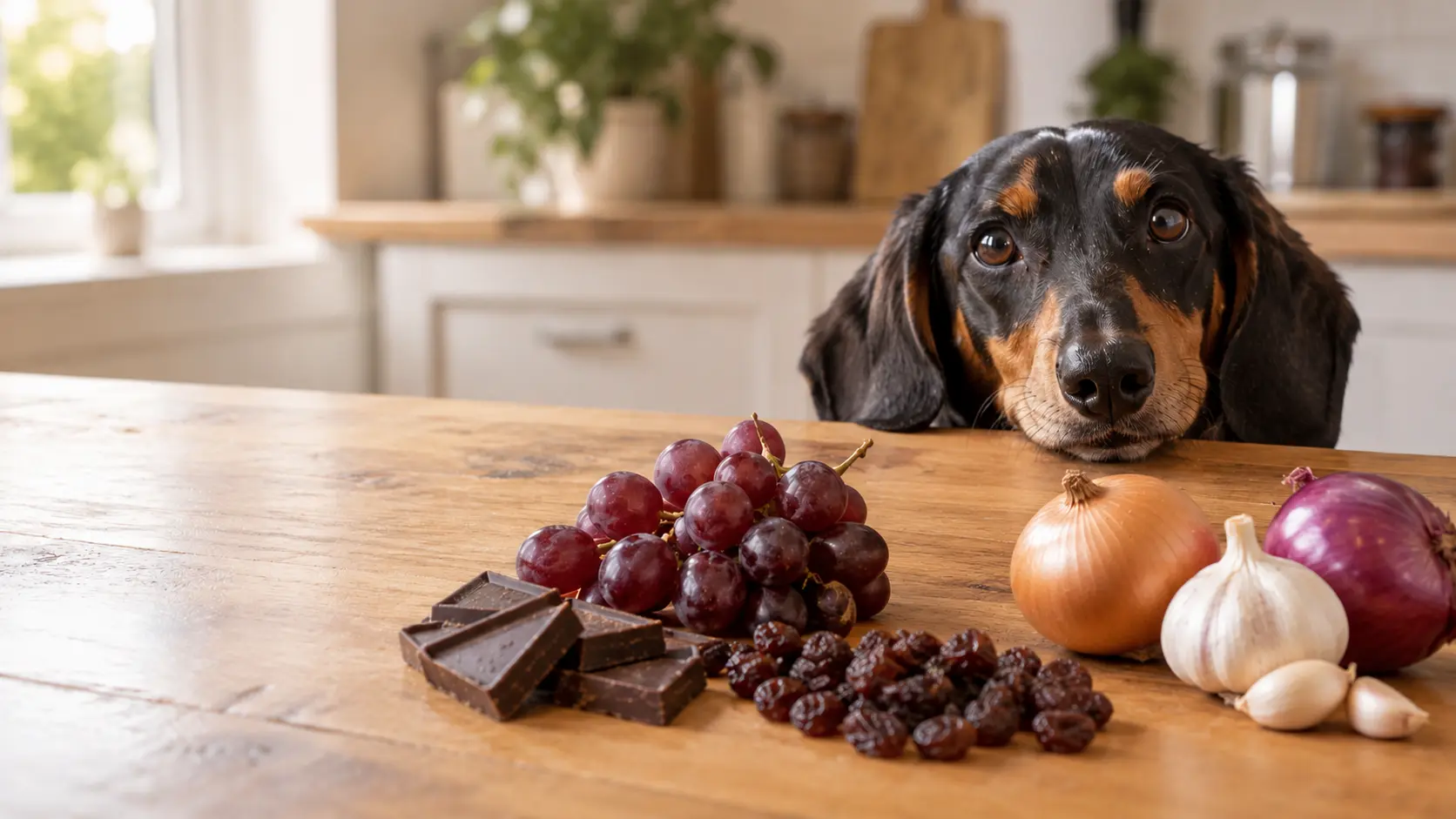
Most pet owners know not to feed their dog a whole plate of leftovers, but some of the most dangerous foods are things we barely think about: a handful of raisins, a piece of sugar-free gum, a bite of dessert. Pets also eat fast and rarely stop to think. Here are ten everyday foods worth keeping well out of reach.
1. Chocolate
Chocolate contains theobromine, which dogs and cats can’t process the way people do. Even a small amount can cause vomiting, restlessness, and a racing heart, and larger amounts can lead to seizures. Dark chocolate and baking chocolate are the most dangerous because they contain far more of it.
It’s worth being careful around celebrations, when boxes of chocolates and sweets are often left on low tables. If your pet gets into some, call your vet and tell them roughly how much was eaten and what kind it was.
2. Grapes and raisins
Grapes and raisins can cause sudden kidney failure in dogs, and vets still don’t know exactly why. Some dogs eat a few and seem fine, while others become seriously ill from a small amount, so there’s no safe quantity to rely on.
Raisins hide in more places than you’d expect, such as trail mix, baked goods, and rice dishes. It’s best to check what’s in a snack before you let your dog have a taste.
3. Onions and garlic
Onions, garlic, and related plants like leeks and chives damage a pet’s red blood cells over time, which can leave them weak, pale, and tired. Cats are especially sensitive, and cooked, raw, or powdered forms are all a problem.
This is why a bite of your dinner isn’t harmless. Many savoury dishes are cooked with onion or garlic, and the effect can build up even if your pet seems fine at first.
4. Macadamia nuts
Macadamias can cause weakness, tremors, vomiting, and trouble walking in dogs, sometimes within a few hours of eating them. Most dogs recover with veterinary care, but it’s a frightening few hours for everyone.
They often turn up in cookies and chocolate-covered treats, which means a pet can get a double dose of something harmful from a single snack.
5. Xylitol
Xylitol is a sweetener found in sugar-free gum, mints, some peanut butters, and a surprising number of baked goods and toothpastes. In dogs, it can cause a sharp drop in blood sugar within minutes, and it can lead to liver damage. Even a small amount can be serious.
Because it acts so quickly, don’t wait for symptoms like weakness, vomiting, or wobbliness to appear. If you think your dog has eaten something containing it, go to a vet right away, and it’s a good idea to know where to find pet emergency care in Dubai before you need it. Check labels on anything sugar-free before it goes near your pet.
6. Cooked bones
Handing a dog a leftover bone seems like a kind thing to do, but cooked bones become brittle and can splinter. Those pieces can damage the mouth, get stuck in the throat, or tear the gut, which often needs surgery.
If your dog loves to chew, there are safer options made for the job, like durable chew toys. And if bones end up in the bin, make sure the lid is secure.
7. Fatty and greasy foods
A piece of fried chicken skin, a spoonful of ghee-heavy leftovers, or the fat trimmed off a steak might look like a treat, but rich food can inflame a pet’s pancreas. The condition, called pancreatitis, causes vomiting, belly pain, and a pet that refuses to eat, and it can become serious quickly.
It often happens after festive meals or barbecues, when leftovers are easy to reach. Keeping plates away from curious noses and bins well covered is the simplest way to avoid it. If your pet has eaten a lot of rich food and starts vomiting or refuses to eat, a veterinary clinic in Dubai can check for pancreatitis before it gets worse.
8. Raw bread dough
Unbaked yeast dough is more dangerous than most people realise. In a warm stomach, the dough keeps rising and can swell the belly, while the yeast ferments and produces alcohol that gets into the bloodstream.
It’s a common kitchen accident, since dough is usually left to prove on a counter or near a warm spot. If your pet eats some, treat it as urgent and call your vet instead of waiting to see what happens.
9. Alcohol and caffeine
Pets are far smaller than we are, so even a small amount of alcohol can cause vomiting, confusion, and dangerous drops in body temperature and breathing rate. Caffeine, found in coffee, tea, and energy drinks, can lead to restlessness, a fast heartbeat, and tremors.
An unattended cup on a coffee table is easy for a curious pet to get into, so it’s worth keeping drinks out of reach, especially when you have guests.
10. Milk and dairy
Cats and milk is a classic picture, but many adult cats and dogs struggle to digest lactose. A saucer of milk or a lick of ice cream can lead to an upset stomach, gas, and diarrhoea, and richer dairy like cheese adds fat on top of that.
Small amounts rarely cause real harm, but it isn’t a healthy treat. Fresh water is the best drink for a pet, and if you want to give them something special, a treat made for dogs or cats is a safer choice.
What to do if your pet eats something harmful
If you think your pet has eaten something from this list, call a vet clinic in Dubai right away, even if they seem fine. Many of these toxins take hours to show symptoms, and by then treatment is harder. Try to note what was eaten, how much, and when, and bring the packaging if you have it. Don’t try to make your pet vomit unless a vet tells you to, as it can make some situations worse.
Conclusion
Most food poisoning in pets is accidental and preventable. Keep sweets, snacks, and drinks out of reach, check labels for xylitol, resist sharing your plate, and call your vet early if something goes wrong. A little caution at home goes a long way.